Overview
Lab-grown sapphire offers jewelry brands, retailers, wholesalers, and designers a durable and versatile colored-gemstone option for custom development and repeat production.
Available in classic blue, teal, star-effect, and other color variations, lab-grown sapphire can support bridal collections, contemporary jewelry, statement designs, calibrated production, and private-label programs.
Understanding Lab-Grown Sapphire
Lab-grown sapphire is crystalline corundum produced in a controlled environment. It shares the essential chemical composition, crystal structure, hardness, and optical characteristics of natural sapphire, with laboratory growth as its origin.
Controlled production can provide more consistent dimensions, color ranges, and clarity options than are commonly available through natural gemstone sourcing.
Lab-Grown Star Sapphire
Star sapphire displays an optical phenomenon known as asterism. When properly oriented and cut as a cabochon, aligned internal features reflect light as a visible star across the surface of the stone.
The visibility and symmetry of the star depend on the internal structure, cutting orientation, dome proportions, light source, and viewing angle. Each production specification should define the required color, dimensions, star visibility, and acceptable tolerance.
Recommended Applications
- Statement rings
- Signet-inspired jewelry
- Bold pendants
- Vintage-inspired designs
- Customized gemstone collections
Lab-Grown Teal Sapphire
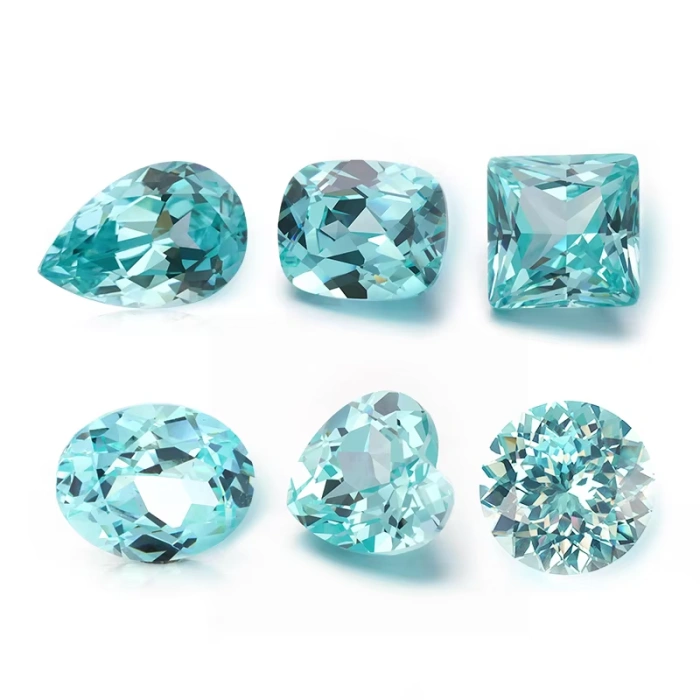
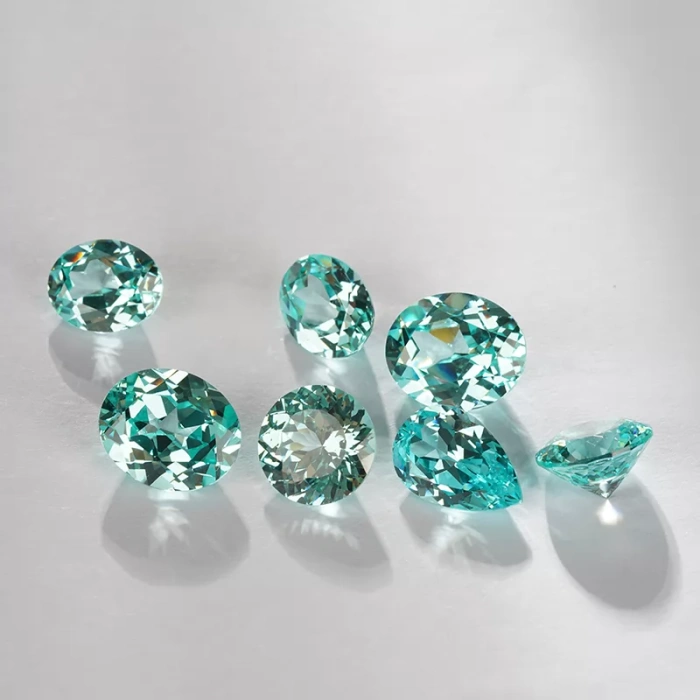
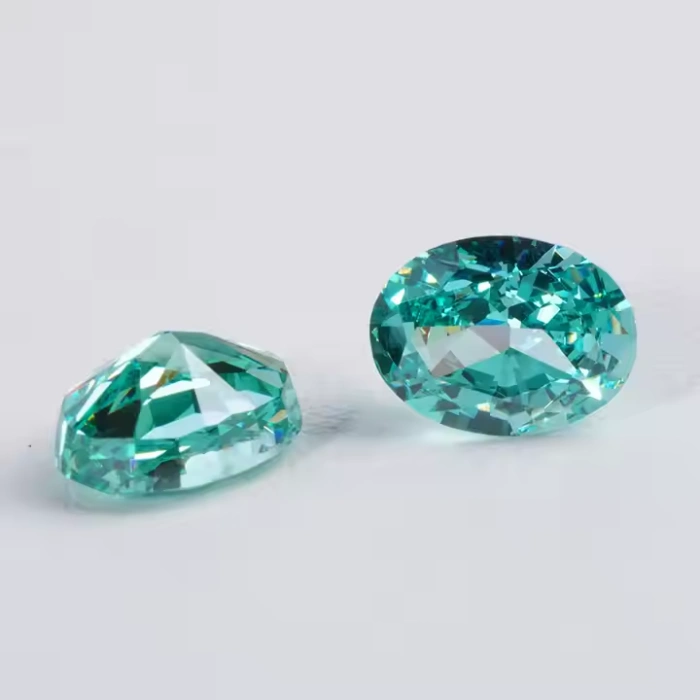
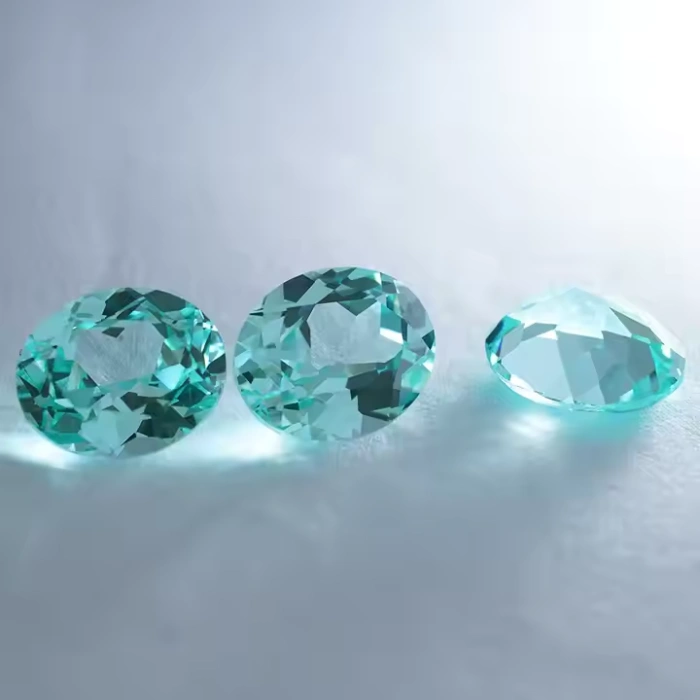
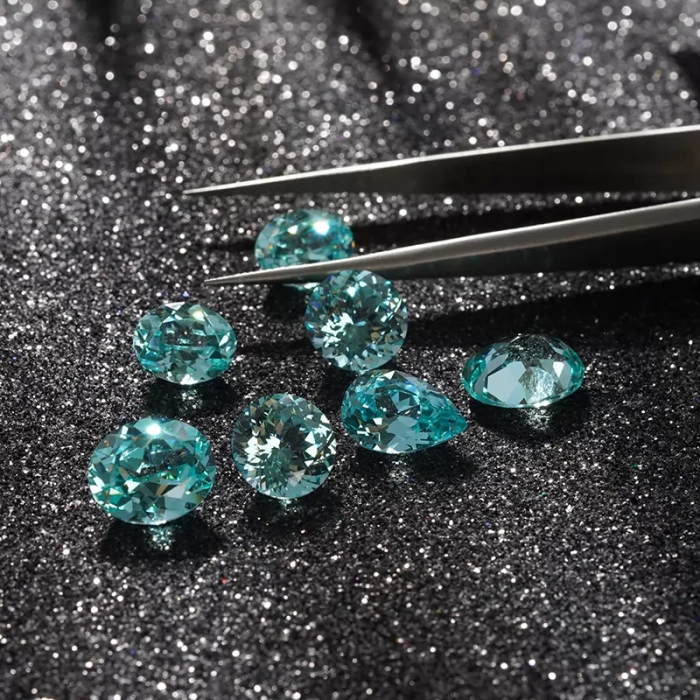
Lab-grown teal sapphire covers a spectrum from blue-green to deeper oceanic tones. It provides a distinctive alternative to traditional blue sapphire and can be used in contemporary, romantic, vintage-inspired, and artistic jewelry.
Buyers can define the preferred balance of blue and green, saturation, tone, clarity, dimensions, and cut style. Approved color references should be retained for repeat production because visual color can vary under different lighting conditions.
Factors Affecting Price Per Carat
The price of lab-grown sapphire depends on more than carat weight. Important factors include:
- Color and saturation
- Clarity
- Shape and cut complexity
- Carat weight and dimensions
- Calibration tolerances
- Star-effect visibility and symmetry
- Matching requirements
- Custom cutting requirements
- Order quantity
Buyers should compare complete gemstone specifications rather than price per carat alone. Two stones of the same weight may differ in dimensions, color, cut quality, optical effect, and commercial suitability.
Advantages for Professional Buyers
Durability
Sapphire has a Mohs hardness of 9, making it suitable for many frequently worn jewelry applications. Finished-product durability also depends on the stone shape, setting design, metal structure, and wearing conditions.
Calibrated Production
Lab-grown sapphires can be supplied in calibrated dimensions for repeat settings, matched pairs, multi-stone layouts, and coordinated jewelry collections.
Color Consistency
Approved color ranges can support more consistent collection planning. Physical samples or master color references are recommended when repeat-order matching is important.
OEM and ODM Flexibility
Loose stones can be combined with CAD development, customized settings, engraving, branded packaging, and private-label manufacturing.
Available Specifications
| Category | Available Options |
|---|---|
| Gemstone | Lab-Grown Sapphire |
| Color Options | Blue, Teal, Pink, Yellow, White, and Other Custom Color Ranges |
| Optical Varieties | Faceted Sapphire and Star-Effect Sapphire |
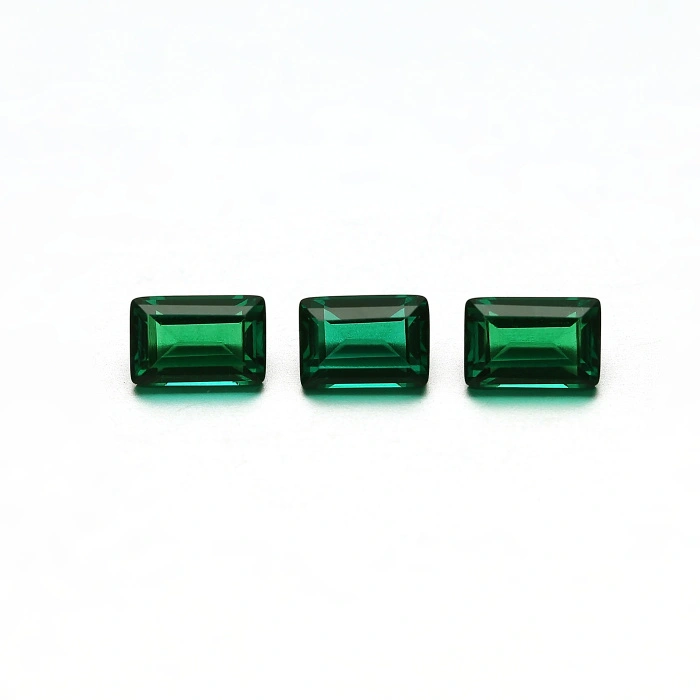
| Shapes | Round, Oval, Pear, Emerald, Cushion, Princess, Radiant, Cabochon, and Custom Shapes |
| Sizes | Calibrated and Custom Dimensions |
| Matching | Single Stones, Matched Pairs, and Multi-Stone Sets |
| Supply Format | Loose Gemstones or Finished Jewelry |
| Manufacturing Services | OEM, ODM, Private Label, Sampling, and Repeat Production |
Jewelry Applications
- Engagement and anniversary rings
- Stud and drop earrings
- Pendants and necklaces
- Statement rings
- Bridal and occasion jewelry
- Coordinated gemstone collections
- Private-label jewelry programs
Information Required for a Quotation
- Sapphire type and required color
- Faceted or star-effect specification
- Required shape
- Carat weight or millimeter dimensions
- Clarity and color tolerances
- Matching requirements
- Loose-stone or finished-jewelry requirements
- Metal and setting specifications
- Order quantity
- Target delivery date
Care Recommendations
- Clean with mild soap, warm water, and a soft brush.
- Avoid abrasive cleaners and unnecessary contact with harsh chemicals.
- Store separately from softer gemstones and jewelry surfaces.
- Inspect prongs and settings periodically, particularly on frequently worn jewelry.
- Confirm the cleaning method for assembled jewelry containing other sensitive materials.
Frequently Asked Questions
Are lab-grown sapphires real sapphires?
Lab-grown sapphires are crystalline corundum produced in a controlled environment. They share the essential material properties of natural sapphire, while their growth origin differs.
Can teal sapphire colors be repeated exactly?
Color can be controlled within an approved range, but exact visual matching may be affected by production batches, stone dimensions, cut, and lighting. Buyers should retain approved samples for repeat orders.
Does every star sapphire display the same star?
No. Star visibility and symmetry depend on the internal structure, cutting orientation, dome proportions, lighting, and viewing angle. Acceptance requirements should be defined before production.
Can calibrated sizes and matched pairs be supplied?
Yes. Stones can be matched according to dimensions, shape, color, clarity, and other approved tolerances.
Is lab-grown sapphire suitable for daily-wear jewelry?
Sapphire’s hardness makes it suitable for many daily-wear applications. However, durability also depends on the setting, stone shape, construction quality, and wearing conditions.
Specification Notice
Final color, clarity, dimensions, weight, optical effect, matching tolerances, price, and production time are based on the approved order specification. Buyers should use physical samples or approved color references when consistency across repeat orders is required.